A Gentle Return to Trust – Part 2
There is a version of “allowing” that can sound a little too soft and effortless to me. As though, if we simply loosen our grip and step out of the way, some magical destiny will unfold before us.
As though the life we long for will arrive if we can only believe hard enough, visualize clearly enough, align our energies enough, or simply stop interfering with the Universe’s plan for us.
I understand the appeal of that belief. Truly, I do. There have been seasons in my life when I wanted very much to cling to this way of thinking.
Don’t get me wrong. I do believe there is mystery in this life. I have experienced moments of grace, surprising openings, and strange little synchronicities that seem to arrive just when I needed them.
But I no longer believe allowing means sitting still and waiting for life to rescue me.
At least, not in the way I once hoped it might.
These days, allowing means something much more grounded to me. It has less to do with passively waiting for a fairytale outcome and more to do with letting myself see what I already know, then taking steps to honor that knowledge.
It means allowing myself to hear the uneasiness I’ve been trying to explain away. It means allowing myself to name the truth beneath the resentment, exhaustion, longing, or ache.
And sometimes, perhaps most importantly, it means allowing myself to admit what I’m afraid of without shaming myself for being afraid.
Because intuition may whisper.
But allowing is the moment we stop pretending we can’t hear it.
Allowing After 50 Begins with Listening
In the first post of this series, Learning to Trust in Your Intuition After 50, I wrote about intuition as the quiet voice within us — the inner guidance system that never really left, even if we stopped trusting it for a time. I believe we all have some version of that guidance within us.
It often comes through as uneasiness, heaviness, restlessness, longing, or a sense that something in our lives is either aligned with who we are or pulling us further away from ourselves.
For many of us, especially as women, that voice has been doubted for a very long time. We have been taught to consider everyone else’s comfort and version of events before our own knowing.
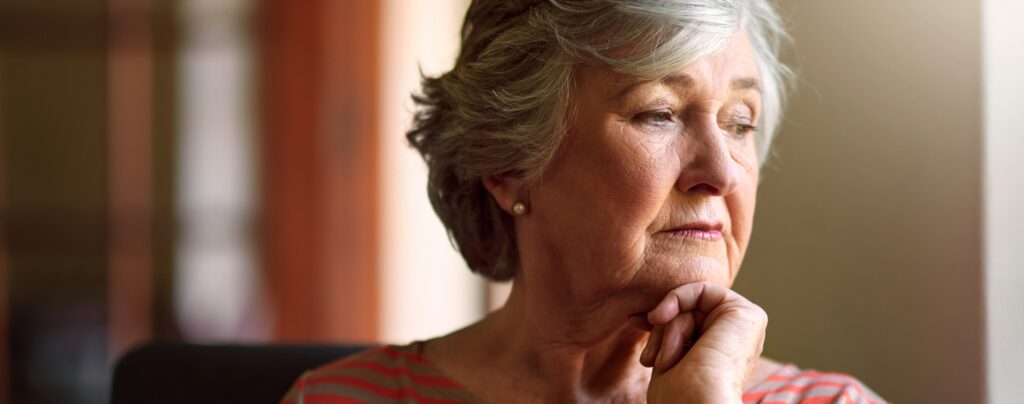
So we feel the uneasiness and tell ourselves — or are told — we are overreacting. We feel resentment and tell ourselves we should be more grateful. We feel exhaustion and tell ourselves it’ll get better.
We feel the longing for something different and immediately begin listing all the reasons it is too late, too risky, too impractical, too selfish, or too much.
But our discomfort is trying to tell us something.
The heaviness before walking into a room. The tightness in our chest before another hard conversation. The dread that rises before another workday. The sadness that comes when we imagine living the same way five years from now.
These feelings aren’t instructions. They’re signals that something in our lives may no longer be serving us, but they don’t always mean we have to burn everything down by morning.
Allowing begins when we stop ignoring or dismissing what these feelings are trying to tell us simply because we’re afraid of what they might demand of us.
What Allowing Can Really Mean
For me, allowing has become less about waiting for destiny to unfold and more about honesty. It’s not passive. It’s not naïve. It’s not pretending that everything will magically work out if I simply think better thoughts.
Allowing, at least as I have come to understand it, can mean several things.
It can mean allowing ourselves to trust our intuition, even when we can’t fully explain it yet. Sometimes the knowing comes before the language, and sometimes the uneasiness is real even if we can’t find a perfectly rational reason for it.
It can mean allowing ourselves to see what our intuition is showing us, even if we’re not ready to act on it. This matters because many of us avoid the truth when we think seeing it will require immediate change.
It can mean allowing ourselves to name our fears without shame. We can admit that we are afraid of failure, judgment, loss, uncertainty, instability, or disappointment without deciding those fears get to run the rest of our lives.
It can mean allowing ourselves to explore possibility before making a commitment. We can research, imagine, journal, ask questions, look at numbers, make plans, or daydream about a different life without forcing ourselves to leap before we’re ready.
It can mean allowing ourselves to take one small step in the direction our inner guidance is pointing. Not the whole mountain. Not the whole transformation. Just the next honest step.
And finally, it can mean allowing the path to unfold differently than we expected. Once we begin taking steps toward a destination more aligned with what we truly want for ourselves, it can be easy to feel discouraged when things don’t go as planned. But these winding journeys often lead us through lessons we didn’t know we needed.
That may not be the fairytale version of allowing.
But it feels much more powerful and real to me.
Seeing Doesn’t Mean Acting Immediately
One of the gentlest things I have learned is that allowing myself to see the truth doesn’t mean I have to act on it immediately. I think I used to confuse awareness with obligation.
If I admitted I was unhappy in a situation, then surely I had to fix it right away. If I admitted I wanted something different, then surely I had to be ready to make it happen.
And if I admitted a relationship, job, pattern, or way of living was hurting me, then surely I had to be brave enough to change everything at once.
Because I was not always ready to do that, I often chose not to see. I stayed vague with myself. I self-medicated, distracted, and numbed myself so that I wouldn’t have to see the uncomfortable truth.
I told myself things might get better if I was patient, practical, or more committed.
And sometimes, maybe they did.
But many times, I was simply more afraid of the unknown than I was of the known.
Allowing has taught me that I can tell myself the truth before I am ready to take action. I can say, “This is not working for me,” even if I don’t yet know what would.
I can say, “I want a different life,” even if I don’t yet know what it looks like or how to build it. I can say, “I am afraid to leave,” “I am afraid to begin,” or “I am afraid I will fail,” without hiding from the truth of it or being ready to do anything about it.
There is power in simply letting the truth into the room.
Because when we do, we stop abandoning ourselves, a subject I explored previously in Reclaiming the Inner Child After 50.
Allowing Ourselves to Be Afraid
One of the most compassionate things we can do for ourselves is to admit that fear is real. It doesn’t go away simply because we will it to.
Sometimes fear is protection. Sometimes it’s memory. And sometimes it’s our nervous system remembering all the times change cost us something.
Of course we’re afraid of leaving what’s familiar, even when the familiar is no longer nourishing us. Of course we’re afraid to stand up for ourselves if we’ve been taught to stay quiet.
Of course changing careers feels reckless when financial security has been hard-won. Of course following a more authentic path feels overwhelming when the old path, however painful or misaligned, is at least known.
Allowing doesn’t ask us to pretend these fears aren’t real. It asks us to sit beside them long enough to understand them. And that distinction matters.
Some fears deserve our attention. Some are asking us to slow down, plan carefully, gather support, or prepare more wisely. But other fears are old guards at old doors, still protecting us from dangers that may no longer exist.
When we allow ourselves to name our fears, we begin to separate caution from imprisonment. We begin to understand which fears deserve respect and which ones have quietly been running our lives without holding the whole truth.
Letting Possibility Enter the Room
I used to think change began with a dramatic decision — a declaration, a leap, a door slammed shut, a life turned upside down. And sometimes change does happen that way.
But more often, I think true change begins much more quietly.
It begins when we allow ourselves to imagine something different before we’re ready to commit to it. It begins when we explore the possibility: when we look up the cost, the route, the training, the apartment, the class, the job posting, the savings plan, or the small first step.
We say, “I’m not promising anything yet. I’m only allowing myself to take a little look.”

There is space in that.
We don’t have to know the whole path before we take our first step toward it. Life rarely hands us the map. And we don’t have to be fearless before we begin.
Sometimes we only need to let ourselves wonder what a new life might feel like, what it might require, and whether there is some small, non-terrifying way to move toward it.
This kind of allowing is not passive. It’s deeply active, but in a quiet, behind-the-scenes way that honors our fears and our readiness.
It lets the soul stretch before it’s asked to run.
There’s a saying from the mystic Rumi that I come back to time and again when I feel lost:
“As you start to walk on the way, the way appears.”
This means that clarity doesn’t always come before action. Sometimes it comes from action.
One Step, Not the Whole Mountain
I can overwhelm myself easily when I look too far ahead. I see the whole mountain — every unknown, every cost, every risk, every skill I do not yet have, every way it might fail — and then I freeze.
This is the reason why I didn’t finish my PhD. It was too big of a mountain to climb and I had no support for the journey.
Maybe you know this feeling too.
It’s the moment when the dream becomes so large and complicated that it stops feeling like an invitation and starts feeling insurmountable.
My most painful past failures have taught me the art of keeping my eyes in front of me. Not at the summit. Not at the entire climb.
Just at the next few feet of path.
One email. One conversation. One journal entry. One search. One boundary. One class. One page. One honest admission. One quiet act of preparation.
There is something profoundly doable about small steps. They don’t demand that we become an entirely new person overnight. They simply ask us to cooperate with the part of us that is trying to become more whole.
Over time, those small steps change the shape of a life.
What I No Longer Believe About Wishing
Recently, I found myself reflecting on a list of things I wanted for myself in a journal entry I wrote almost seven years ago. It was, in essence, a description of the life I longed for when I was still standing in the wreckage of a life that no longer felt like mine.
I talked about that wreckage in my first post called The Dark Night of the Soul.
What stunned me was realizing how much of that list had quietly come true.
Not all of it, of course. Life is not that tidy. But much more than I expected.
At first, there was a part of me that wanted to see it through the lens I once used. Maybe I had manifested it. Maybe I had aligned with it. Maybe the Universe had actually delivered.
But that explanation no longer rang true and it did a disservice to the blood, sweat, and tears I’d poured into bringing those things to fruition.
Because when I looked more closely, I saw something else.
I saw the work. I saw the grief. I saw the decisions, the endurance, the risks, the moments when I kept going even though I was tired, overwhelmed, and defeated.
I saw the moments when I chose peace over chaos, when I chose my dream over discouragement, and when I chose myself, sometimes shakily and imperfectly, but chose myself nonetheless.
Those things didn’t appear because I wished for them. They came because I allowed my desire to inspire movement.
They came because, little by little, I allowed myself to want something, then allowed myself to see what stood in the way, then allowed myself to take one step and then another.
There is something incredibly empowering about this realization. It takes the magic out of the clouds and places some of it back in my own hands, where it had been all along.
Not all of it, of course.
We are not in control of everything. Bad things happen. Loss happens. Other people make choices that affect us. Circumstances shift. Doors close. Storms come.
But even in the storm, we’re not powerless.
We can choose how we tend to ourselves, and we can choose what we continue to participate in. We can choose what we stop pretending not to know.
We can choose the next step, even if it is small, in the direction of a dream or a future more aligned with who we are and who we are becoming.
And maybe this is where I now locate the miracle. Not in the wishing alone, but in the moment desire becomes movement and we begin participating in the creation of our own lives.

The Path Rarely Looks Like the Plan
If there is one thing I have learned, it is that the route to the life we desire is rarely the route we would have chosen for ourselves. Time and again, this has discouraged me.
We want straight lines, clear signs, immediate results, and proof that we’re not wasting our time.
But life often gives us winding roads. Delays. Detours. Waiting seasons. Lessons we didn’t know we needed.
This is the uncomfortable place between “no longer” and “not yet.”
Maybe this, too, is part of allowing.
Allowing the path to be less efficient than we hoped. Allowing the lessons to come in their own time. Allowing the timing to unfold in its own way without using uncertainty as an excuse to do nothing.
There is a delicate balance here. We don’t force, but we do participate. We don’t demand certainty, but we do take steps.
We don’t shame ourselves for being afraid, but we don’t let fear become the only voice we hear.
A Gentle Way Forward
Maybe allowing after 50 begins by saying something simple and honest to ourselves.
I allow myself to know what I know.
I allow myself to want what I want.
I allow myself to admit what isn’t working.
I allow myself to see what I am afraid of.
I allow myself to consider another way.
I allow myself to begin small.
I allow myself to be changed by the path as I walk it.
That isn’t passivity. It’s the moment we stop fighting the truth within us and begin letting it breathe.
And perhaps this is why allowing must come after intuition. First, we hear the quiet voice. Then, we decide whether we’ll make room for what it’s trying to tell us.
In Part 3 of this series, I want to write about what often rises when we reach that doorway: resistance. Because even when we hear the truth, and even when we begin acting on it, we can still put obstacles in our own way by allowing fear and impatience to take over.
But even resistance has something to teach us. Perhaps it isn’t the enemy of growth, but the frightened guardian at the edge of it.
For now, maybe it’s enough to begin here: with the quiet voice, with the truth beneath the fear, with one small step, and with the gentle, powerful act of allowing ourselves to see.