On the sacred joy of reclaiming space, healing through creation, and beginning again
There is a particular kind of quiet that settles in after motherhood shifts.
It isn’t loud.
It doesn’t announce itself.
It arrives gently—rooms used less often, doors closed less frequently, spaces that no longer hold the hum of daily life.
When my son moved out of his room and into the basement apartment on his way to an autonomy that didn’t include me, I expected the quiet to feel heavy. And at times, it did. There was grief in it. An aching tenderness. A sense of loss that had no sharp edges, but lingered just the same.
I wrote more about that transition—the identity shift, the grief, and the unexpected openings that come with it—in my post On Becoming an Empty Nester: Identity, Loss, and Discovery.
What surprised me was what responded to the change that was happening around me. As the noise receded, something else began to quietly speak.
The Blank Slate We Don’t Know We’re Allowed to Touch
For many women over 50, creativity feels like a luxury—something reserved for the talented, the trained, or the fearless. We tell ourselves we missed the window. That our role is now to maintain what already exists rather than imagine something new.
But creativity doesn’t begin with talent.
It begins with permission.
There is a quiet thrill that comes with a blank slate. And also, if we’re honest, a little fear. A blank space asks questions:
What do you want?
What do you like?
Who are you now, when no one else is shaping the answer?
Those questions can feel unsettling when we’ve spent years orienting our lives around others. Yet they are also an invitation.
The Room That Was Waiting
My son’s old bedroom sat untouched for a while.
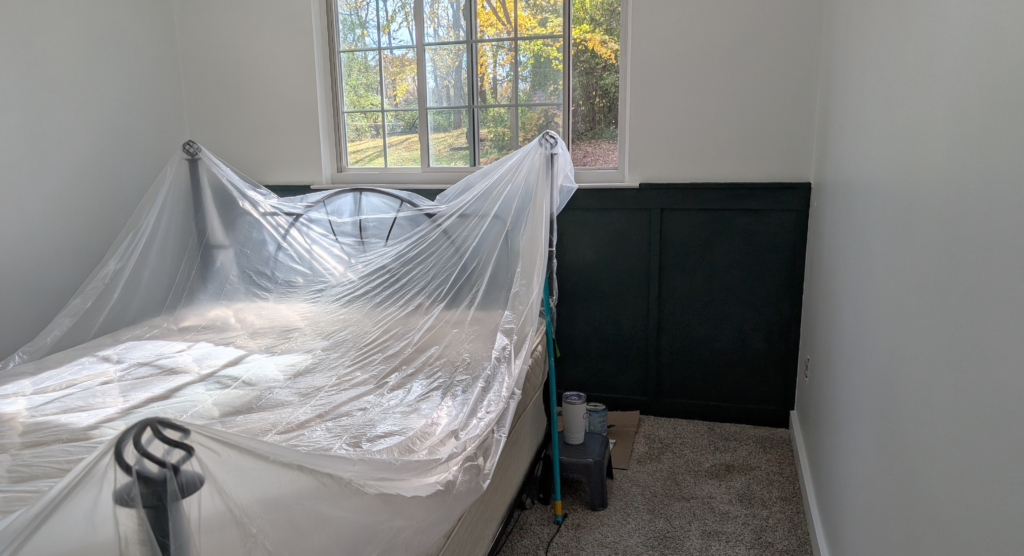
It wasn’t exactly a shrine to the past, but it wasn’t alive either. It existed in a kind of emotional limbo—still holding the shape of the teenaged boy who had once occupied it, quietly waiting.
One day, it occurred to me that the room was no longer empty.
It was available.
Available space carries energy. And unused space often holds more than dust—it holds memory, attachment, and sometimes guilt. The idea of changing the room stirred unexpected emotions. Was I erasing something? Moving on too quickly? Betraying a memory?
What I came to understand is this: taking back space doesn’t mean forgetting. It means allowing life to continue its unfolding. I explored this idea more fully in Taking Up Space Again: A Woman’s Quiet Reclamation After 50—how many of us continue to hold space for people and relationships long after they’ve changed, and how quietly liberating it can be to reclaim it.
I wasn’t replacing what had been there.
I was responding to who I had become.
Letting Vision Emerge (Without Rules)
I began the way many of us do—by searching online for inspiration on how to transform the room into something for me. Meditation rooms. Sacred spaces. Quiet corners. I let images wash over me, noticing what stirred something inside and what didn’t.
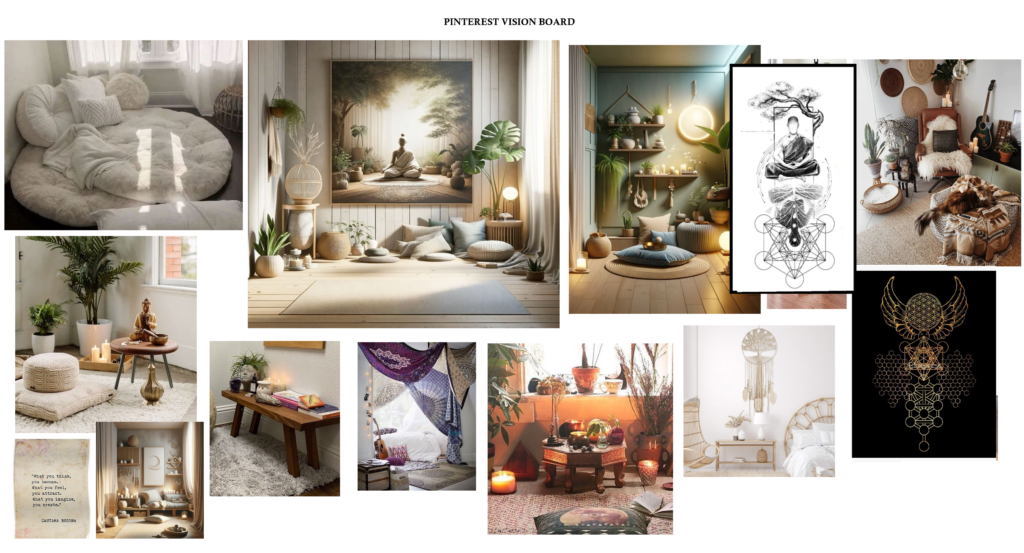
I wasn’t looking to replicate anyone else’s vision. I was listening.
Over time, patterns emerged. Light. Simplicity. Calm. I realized I wanted a space that felt open and uncluttered—something that would support stillness rather than distract from it.
I painted the entire room a crisp, clean white. The kind of white that feels expansive rather than cold. With the walls finished, the room felt like a held breath—ready, but not yet spoken into being.
Creativity as Playful Exploration
Instead of ordering new furniture, I turned to thrift stores.
What followed felt less like shopping and more like an exciting scavenger hunt. I wandered aisles slowly, touching wood, sitting in chairs, paying attention to what felt right rather than what looked impressive.
There is something deeply freeing about choosing objects this way—without trend, without urgency, without explanation.
Creativity thrives when we remove the pressure to impress.
Piece by piece, the room began to assemble itself. Nothing extravagant. Everything intentional.
When Imagination Becomes Physical
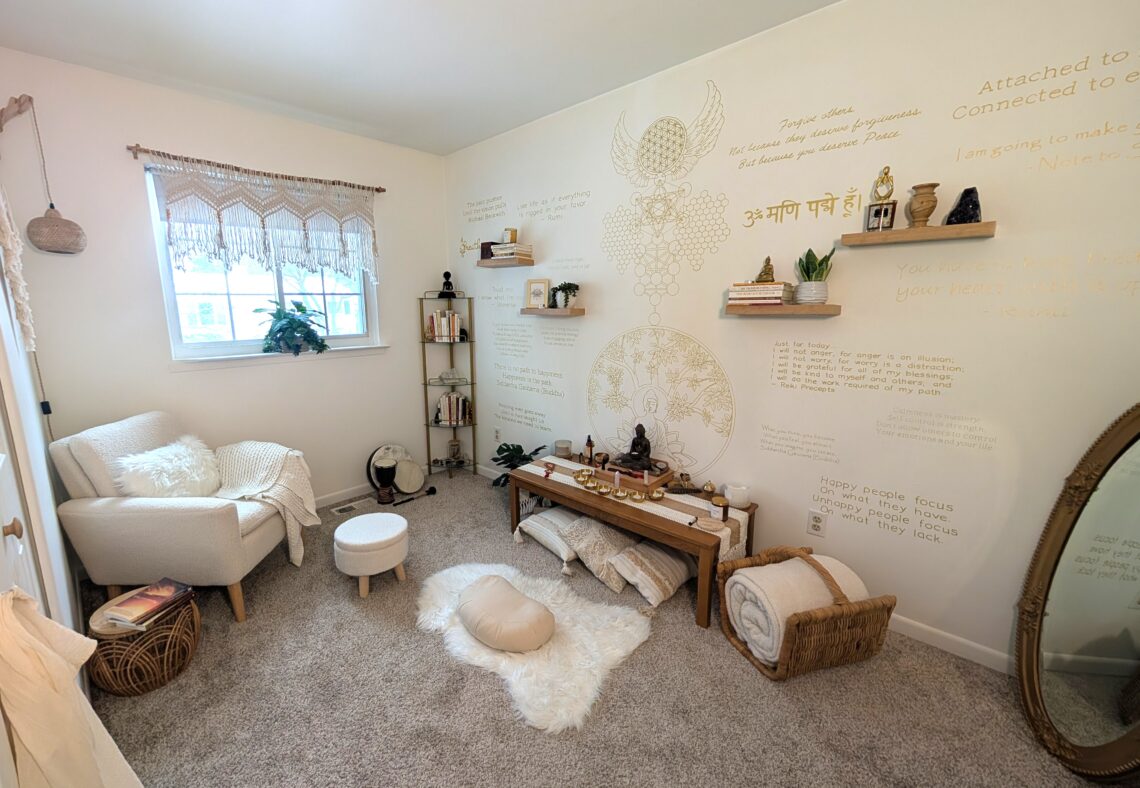
The focal point of the room became a wall mural. I wanted it to be a record and a reminder of my spiritual path and so I gathered my favorite quotes—the ones that had been key in shaping my growth—and included them in my vision.
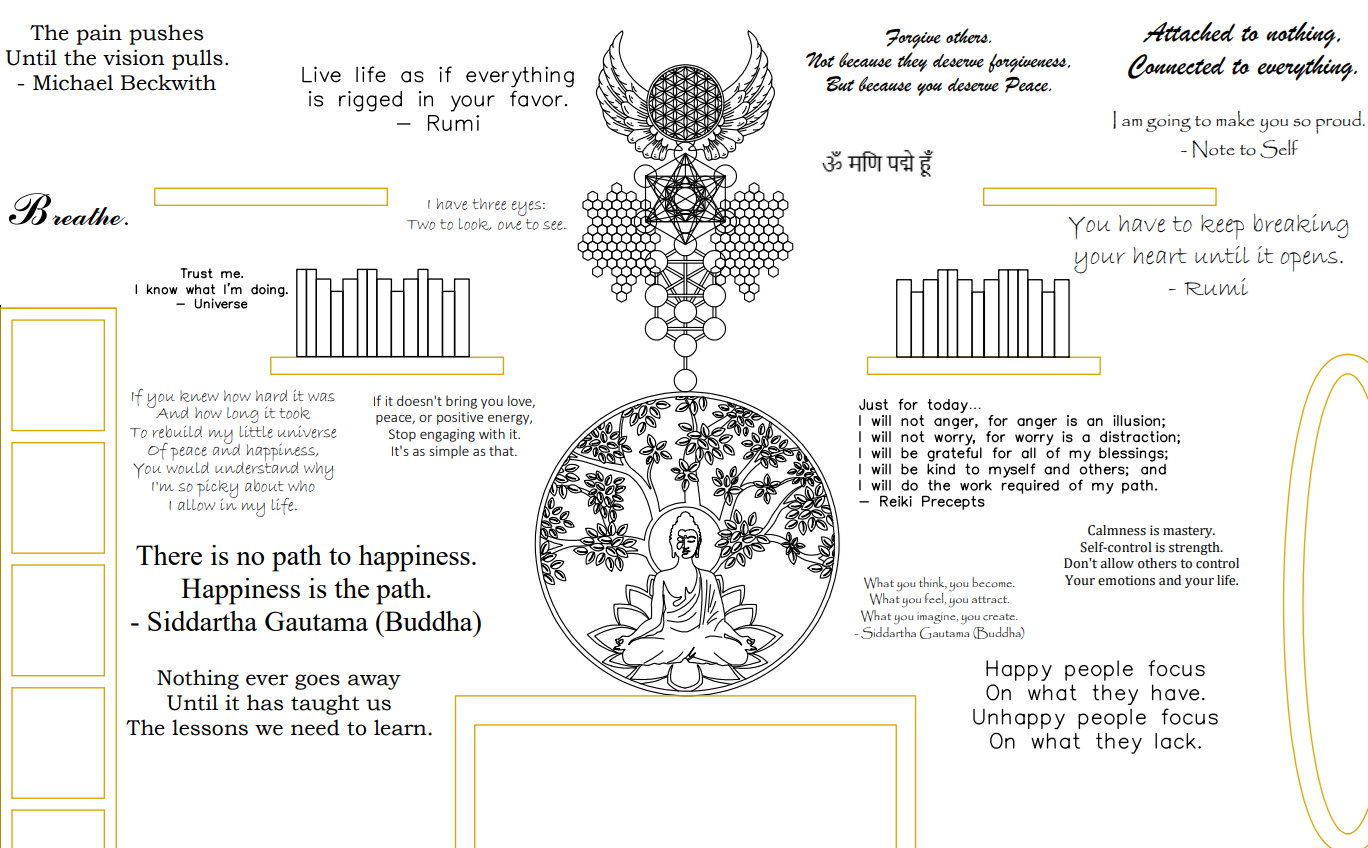
I designed the mural, incorporating the furniture and shelving I’d thrifted, with graphic design software—lines and forms that held meaning for me—then used a projector to cast the image onto the wall. Standing there, tracing the projected lines by hand with a gold marker, I felt a quiet reverence. An honoring of who I’d been and the person I now was.
This was imagination crossing a threshold.
Line by line, vision became form. Imperfectly. Slowly. Intimately.
There was something profoundly healing in the act itself—not because the result needed to be flawless, but because I was honoring an inner part of myself by giving it form.
Gathering the Sacred
At the heart of the room sits my altar.
My Buddha Rupa anchors the space, surrounded by objects gathered over time—pieces that carry resonance and deep meaning to me rather than ornamentation. Nothing feels stylized. Nothing feels performative.
This room is not a showpiece.
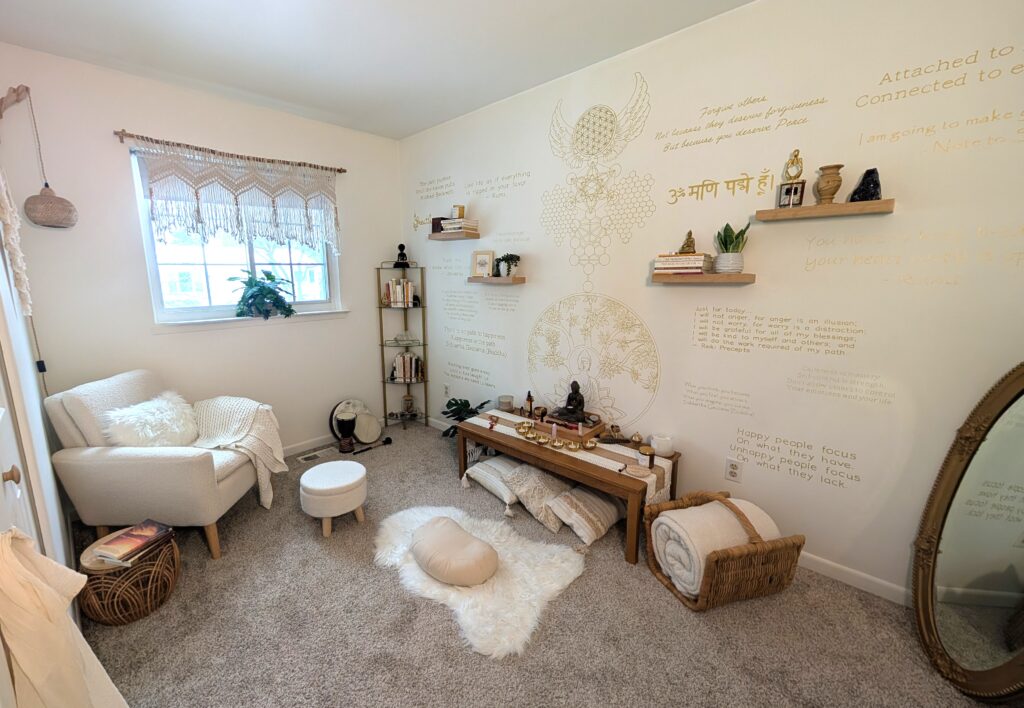
It is a living space. A place I return to daily for my spiritual practice. A room that supports silence, breath, peace, and presence.
In creating it, I wasn’t decorating. I was listening. And in listening, something softened and expanded within me.
Creativity as Catharsis
Creative expression gives emotion somewhere to go.
Grief, guilt, longing—these feelings don’t disappear simply because we’re ready to move forward. They need movement. They need translation. They need form.
Creativity doesn’t fix us. It frees us.
Through the process of transforming this room, I felt old emotions loosen their grip. Not dramatically. Gently. As if pain, once acknowledged and given shape, no longer needed to linger so tightly in the body.
This is the quiet power of creative expression. It allows what has been stagnant to move. It gives the unseen a voice.
An Invitation
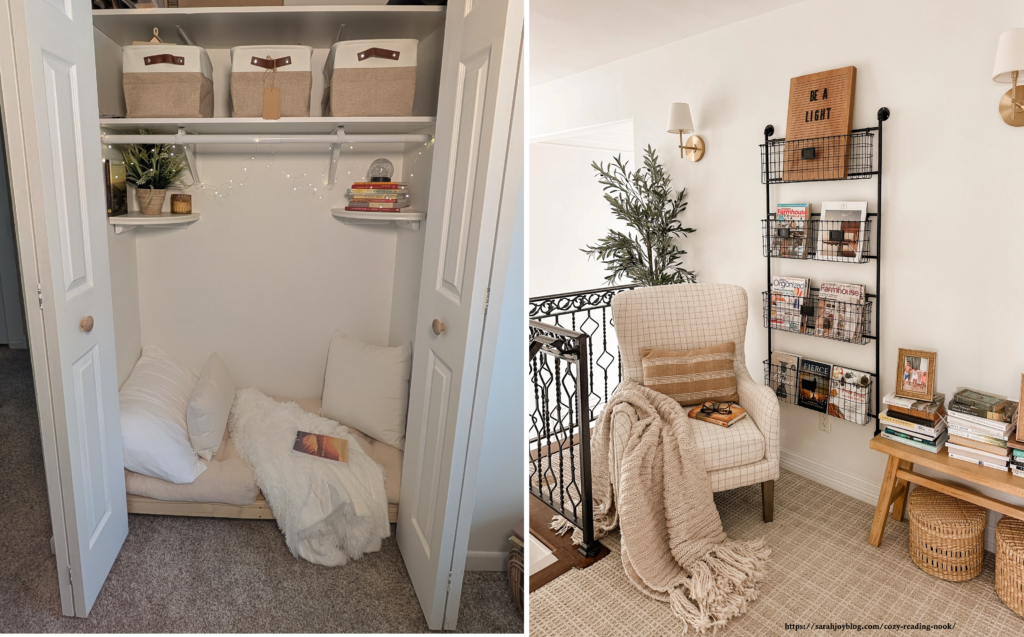
You don’t need a spare bedroom to begin.
Maybe it’s a corner. A closet. A table. A space you’ve unconsciously reserved for something—or someone—no longer present.
Ask yourself:
- How can I learn more about what I like?
- How can I experiment with my own imagination?
- How can I show real pieces of myself in the spaces around me?
You don’t need talent.
You don’t need permission from anyone else.
You need curiosity and a willingness to explore more about yourself.
When the house grows quiet, creativity often speaks.
If we’re willing to listen, there’s healing and freedom to be found in it.