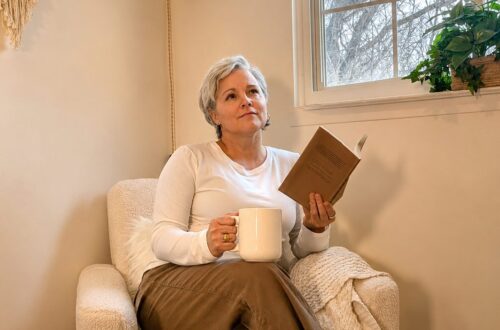
There is something about sitting alone in an old church that fills me with reverence.
Sometimes it’s the beauty. Sometimes the silence. Sometimes it’s the worn stone beneath my feet and the knowledge that thousands of other people have stood in the same place carrying grief, fear, gratitude, desperation, love, and questions they could not answer.
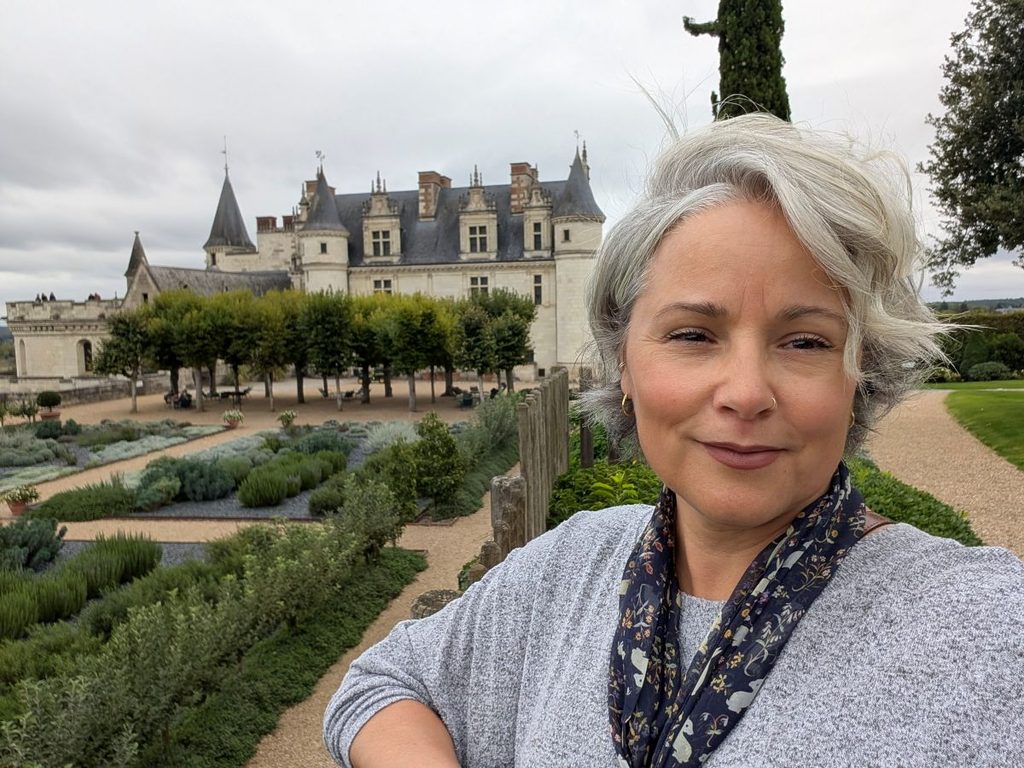
I’ve felt this again and again during my six-week spiritual pilgrimage through France after 50.
I came here partly to trace my family’s roots. And I came here partly to celebrate and mourn my changing role in my son’s life, who is heading off to university in the fall.
What I didn’t expect was how deeply moved I’d become by the people who came before me—not only my own ancestors, but the countless unnamed people who walked into these churches and cathedrals searching for something larger than themselves.
I find myself thinking about them constantly.
The seeking hearts.
A Journey That Began With My Father
My father wasn’t an easy man to know.
He was good-humored, but emotionally reserved. He worked long days as a logger, often ten or twelve hours, sometimes more. When he came home, the house adjusted around him. We were quiet while he ate dinner, read the newspaper, watched his television program, and went to bed early.
He rarely spoke about his feelings.
He was especially awkward when it came to communicating with his four children. In many ways, he was a stranger to us, and even now I find myself wondering what he thought about, what he dreamed about, and what he might have wanted from his life if circumstances had been different.
I lived at home longer than my siblings and, as I grew older, I tried to build more of a relationship with him. Even then, he rarely revealed much. But every once in a while, he would make a small comment that opened a window into what he thought or felt.
Three of those comments were the early inspirations for this pilgrimage I’ve just returned home from.
When I was an adolescent, he told me our family was Acadian. I had no idea what that meant, so the next day I went to the library to find out.
Some years later, he told me our family had originally come from Normandy. He wasn’t a researcher, so I assume that was information passed down through his family, one of those fragments of history that somehow survives even when most of the details are lost.
Then, in 2001, after I’d moved from Toronto back to northern Ontario and was talking about doing some traveling, my father told me he had thought about going to France.
That one stayed with me most of all.
Born in Québec, French was his first language, so he would have had no trouble communicating in France. But my father had never been on an airplane and had barely traveled at all beyond road trips in and around Ontario. I offered to go with him at the time, but even as I said it, I knew he’d never say yes.
Traveling to France would have taken him far beyond his comfort zone, and my father wasn’t someone who ventured very far beyond those boundaries.
But he had thought about it. And twenty-five years later, that still makes my heart ache.
What I Did With My Grief
When my father died twenty years ago, I needed somewhere to put my grief.
So I started researching our family history.
Genealogy was very different then. There were fewer records online, and finding people often meant tracking down parish registers, census records, old family histories, microfilm, and whatever fragments other researchers had managed to uncover. Over the years, more and more became available online, and the tree I was building grew into something enormous with tens of thousands of people in it.
At first, I think I simply needed something to do. But the research quickly became much more than collecting names and dates.
I became fascinated by the movement of families across time: France to Acadia, Acadia through displacement and exile, generations rebuilding lives in new places, families marrying into other families until the branches of the tree began weaving back through one another. History stopped being something that happened to people in textbooks and became something that had happened to us.
Eventually, my research traced our Fleury line back to Normandy, just as my father had said.
And twenty years after my father died, I walked into a deserted, little church in La Ronde-Haye where our last known Fleury ancestors, Richard Fleury and Louise Lehodey, had brought their children to be baptized three hundred years before.
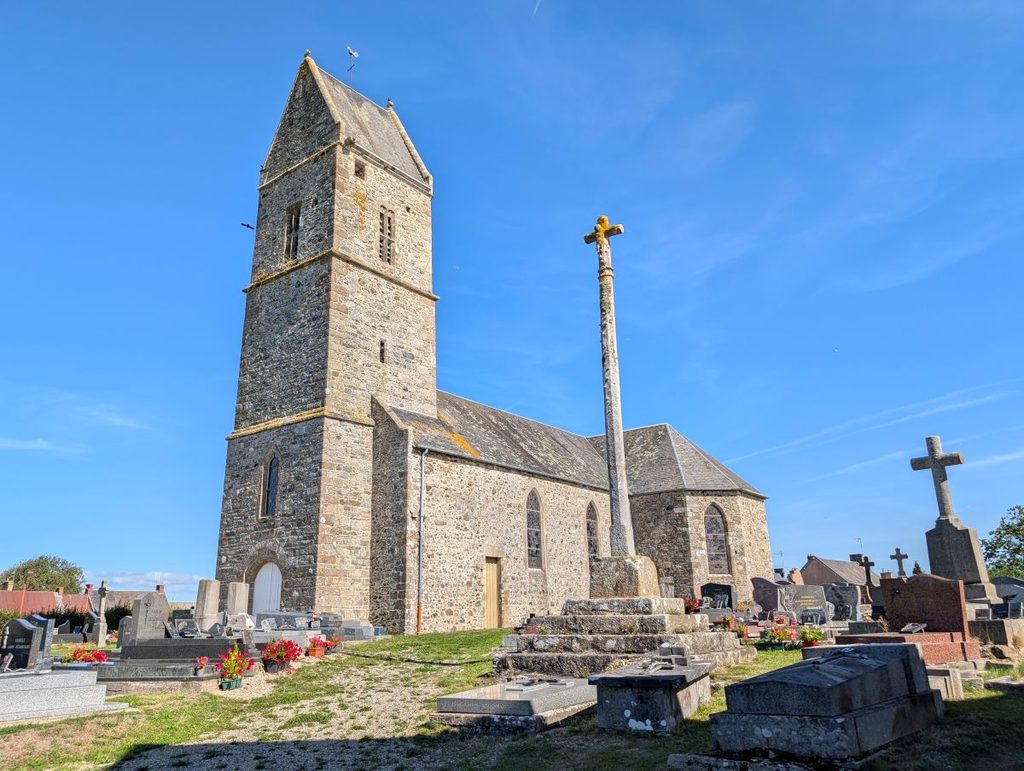
I’m still not sure how to describe that moment.
For years, these people had existed as names in records I’d collected. I knew when they lived, whom they married, where their children were born, and which of those children eventually immigrated to Canada and became part of the long chain of people leading to my father and then to me.
And then suddenly, I was standing where they had stood.
I walked through the church and the cemetery outside, thinking about all the years I’d spent following this family backward through time. I thought about my father telling me, almost casually, that our family came from Normandy, and I wished very much that I could tell him I’d found them.
In some strange way, walking into that church felt like completing something he had started simply by telling me where we came from.
Following the Trail Into Sacred Places
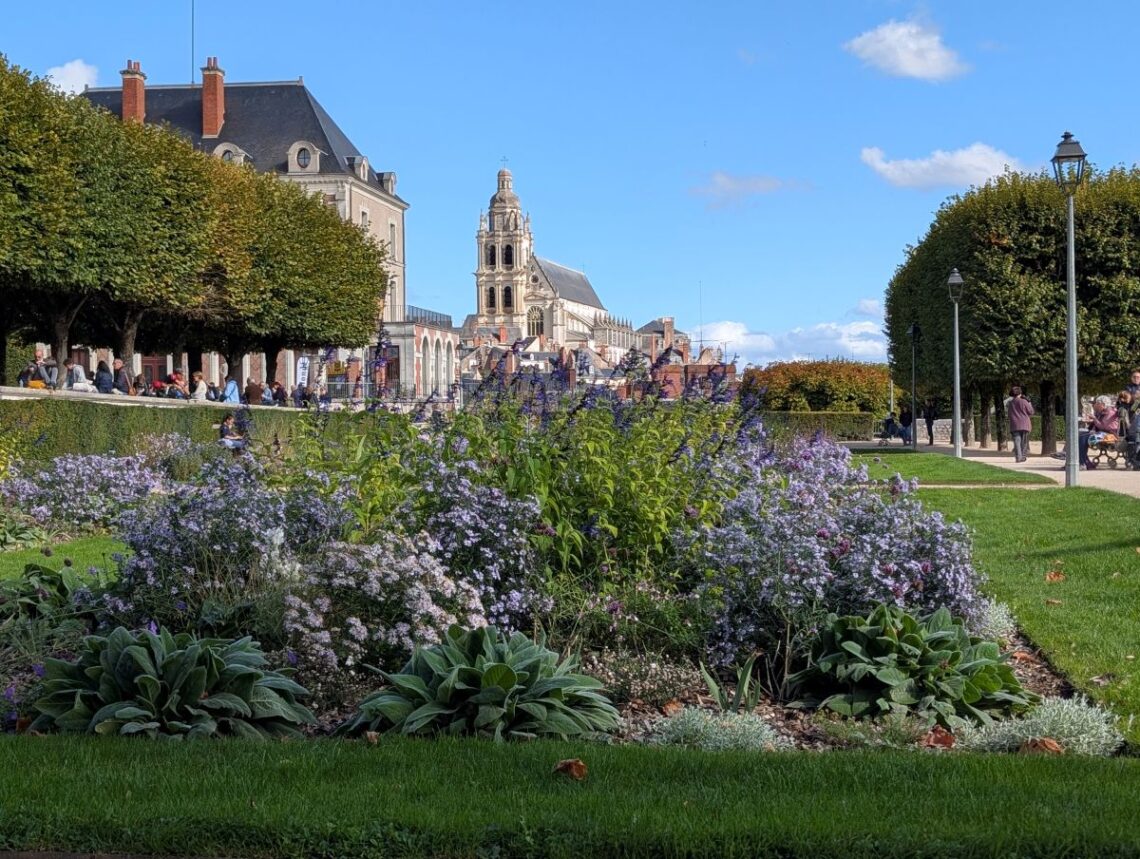
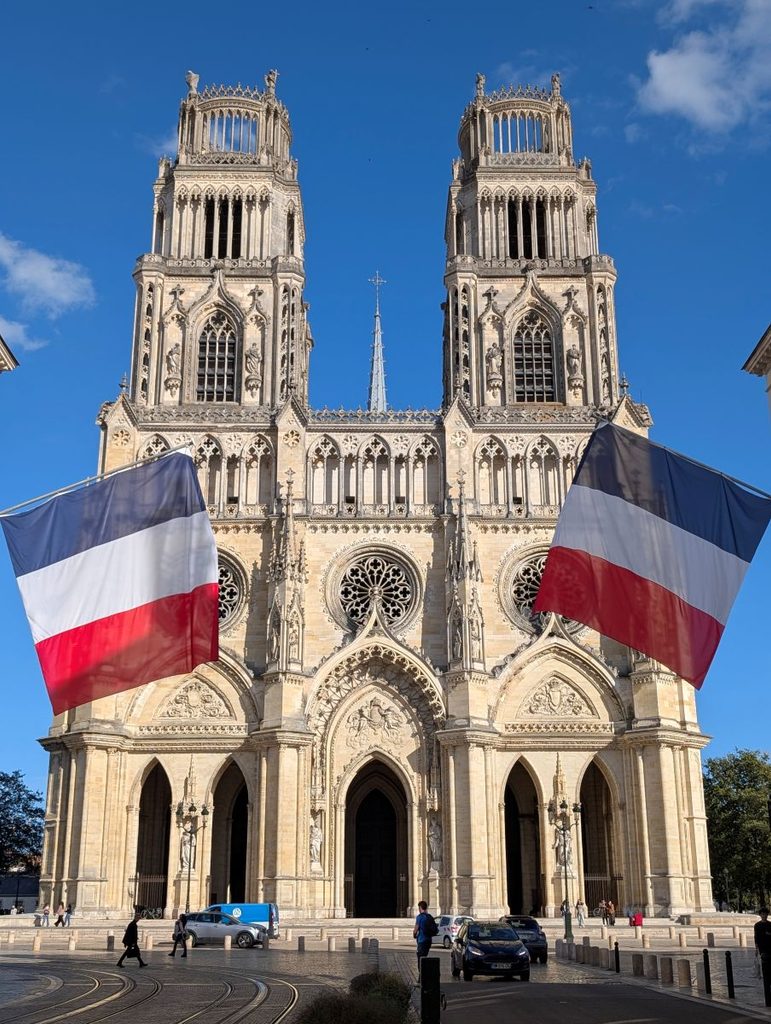
My interest in genealogy has always been tangled up with my love of history, so coming to France meant visiting not only ancestral villages but churches, cemeteries, abbeys, castles, basilicas, and cathedrals.
I expected to be fascinated by the architecture and history and I certainly have been.
What I didn’t expect was how often I would sit quietly in these places and start thinking about the people who once came through their doors.
A mother praying for a sick child. Someone grieving a husband or wife. A young man frightened about going to war. A family worried about crops or hunger or disease. Someone asking forgiveness for something they couldn’t undo, or pleading for help because they’d reached the limits of what they knew how to do themselves.
Their understanding of God may have been entirely different from mine. Their lives certainly were.
But their longing wouldn’t have been.
Those human questions haven’t changed very much. We still wonder why we’re here, why people suffer, what happens when we die, whether our lives matter, and how we’re supposed to endure the things that threaten to break us.
We still wonder whether we’re loved.
We still hope someone—or something—is listening.
Why I Light a Candle
From the beginning of my pilgrimage, I developed a small ritual.
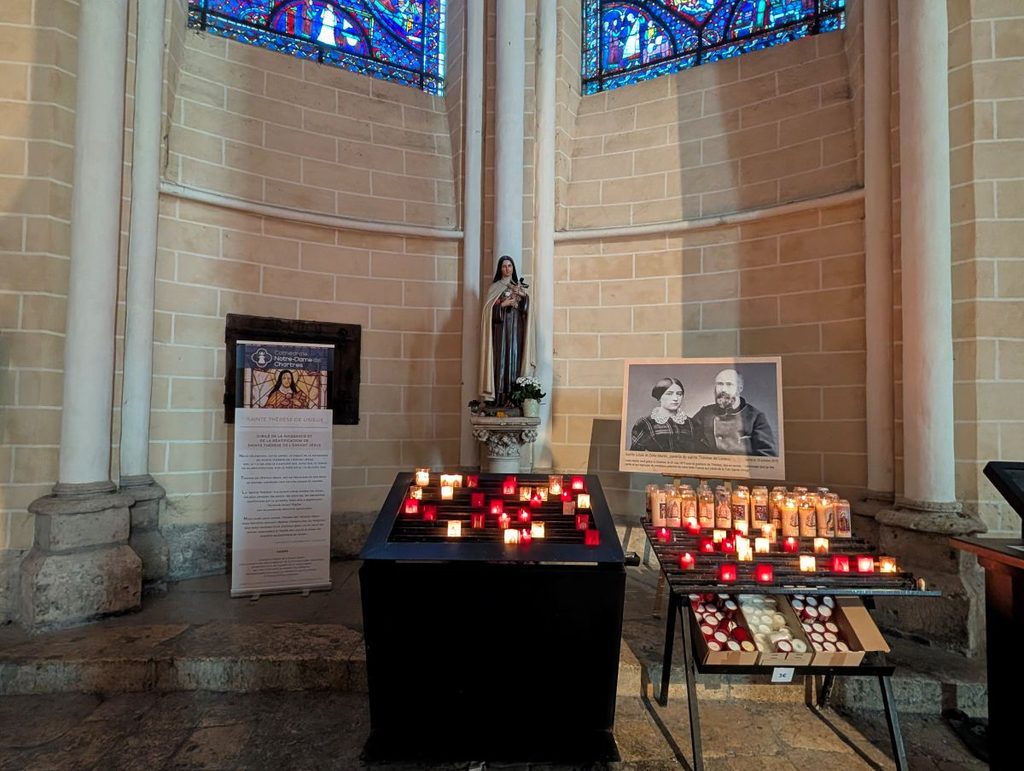
Whenever I enter a church, cathedral, or basilica, I donate change in exchange for a candle that I leave alight at the altar.
I’m no longer a practicing Catholic, so I’m not lighting it because I’ve returned to the faith I was raised in. I suppose I light it as an act of reverence for everyone who has ever walked into a sacred place searching for something.
I light it for those who ached for connection, understanding, meaning, comfort, and community.
I light it for the pure spirit of the seeking heart, which has so many questions unanswered.
Some of them believed with certainty. Some must have doubted. Some probably spent their entire lives moving back and forth between the two.
There are few things I find more moving now than the simple fact that they kept seeking.
The Pilgrims Who Never Reached Mont Saint-Michel
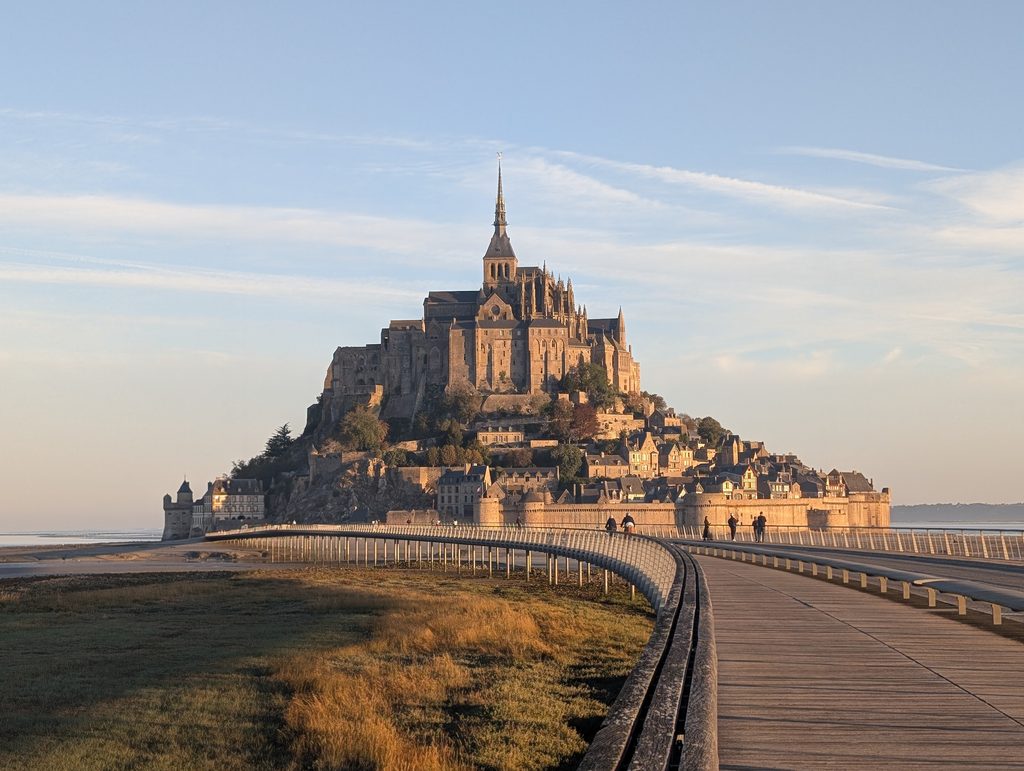
I felt this particularly strongly at Mont Saint-Michel.
For centuries, pilgrims traveled there under circumstances I can barely imagine. There were no comfortable walking shoes, weather forecasts, tidal schedules, shuttle buses, restaurants, or hotels waiting at the end. They crossed dangerous tidal flats, quicksand, and vicious currents, exposed to weather, illness, and exhaustion.
Many of them never arrived.
I couldn’t stop thinking about that during my overnight stay on the Mont.
By the time I was ready to leave, after visiting the Chapel of St-Aubert and the great Abbaye of Mont St-Michel, my feet were in rough shape…as were my knees and hips. Over three days I’d covered about 20 miles and my body was feeling every step.
The causeway between the Mont and the mainland is about 1.5 miles long and my car was another half a mile or more beyond. As I started on my way to the shuttle stop, I thought of all those who had perished before ever setting foot on the sacred rock and instead of queuing for the bus, I kept walking.
I walked to honor those who never made it. I walked because, in that moment, it felt important to make the final part of my own pilgrimage on foot. And I walked because so many people had made this journey before me with far more at stake than a pair of sore feet.
Sitting in Mass Again
One of the stranger parts of this journey has been finding myself attending Mass again.
I was raised Roman Catholic, but I left Catholicism behind many years ago. Eventually I found a spiritual home that felt more comfortable in Buddhism, and last spring I took the Bodhisattva vows.
For a time, I even wondered whether I might someday explore monastic life more seriously. But as I learned more, I also began confronting something that had troubled me deeply in Catholicism: the ways women have been excluded, diminished, or pushed toward the margins of spiritual traditions largely shaped and governed by men.
That realization hurt more than I expected.
I’d already spent years disentangling myself from teachings that once made me feel ashamed of my body and suspicious of myself simply because I was female. Discovering similar structures within the Buddhist traditions I was exploring felt like another betrayal from a place where I’d hoped to find refuge.
Carol Lee Flinders’ book At the Root of This Longing came into my life around the time of these realizations and gave language and shape to some of the uneasiness I was struggling to understand. It also introduced me more deeply to women who had pursued profound spiritual lives even when the institutions surrounding them did not give women equal access to authority.
Eventually, I stopped trying to find the religious tradition that could give me all the answers.
I began questioning everything instead. I began stripping away dogma from my own spiritual practice, seeking instead to get to the truth of it all.
And oddly enough, once I gave myself permission to do that, I also became more comfortable walking back into Catholic churches.
Here in France, I’ve attended Mass in cathedrals without feeling any need to call myself Catholic again. I can sit among people saying prayers I once knew by heart and feel something genuine in the experience without needing to agree with everything the institution teaches.
I notice the community now.
I notice the old woman several pews ahead of me, the family slipping quietly into their seats, the voices rising together inside a building where countless other voices have been doing the same thing for centuries.
There’s something moving about that.
Maybe leaving a religion doesn’t always require rejecting everything people have ever found inside it.
Paying Homage to Thérèse
That thought was part of what brought me to Lisieux.
I learned more about Thérèse of Lisieux through Flinders’ book, and something about her stayed with me. Here was a young woman living within a deeply patriarchal religious structure who nevertheless took her own inner life completely seriously.
She listened to what moved and questioned inside her.
She trusted it.
And she found a way to make her life matter without seeking power within a structure designed primarily for men. She sought only to rise to the profound calling of her own soul.
That distinction means something important to me now as I ponder my own path.
There are so many ways women have been taught to measure themselves against standards established by institutions that weren’t created with us in mind. We can spend enormous amounts of energy trying to earn permission, status, recognition, or a place at a table that was never built for us.
Women like Thérèse remind me that there’s another, more fulfilling possibility.
We can listen inward.
We can take our own questions seriously.
We can follow the strange urgings that tell us there is something worth seeking, even when no one around us completely understands why.
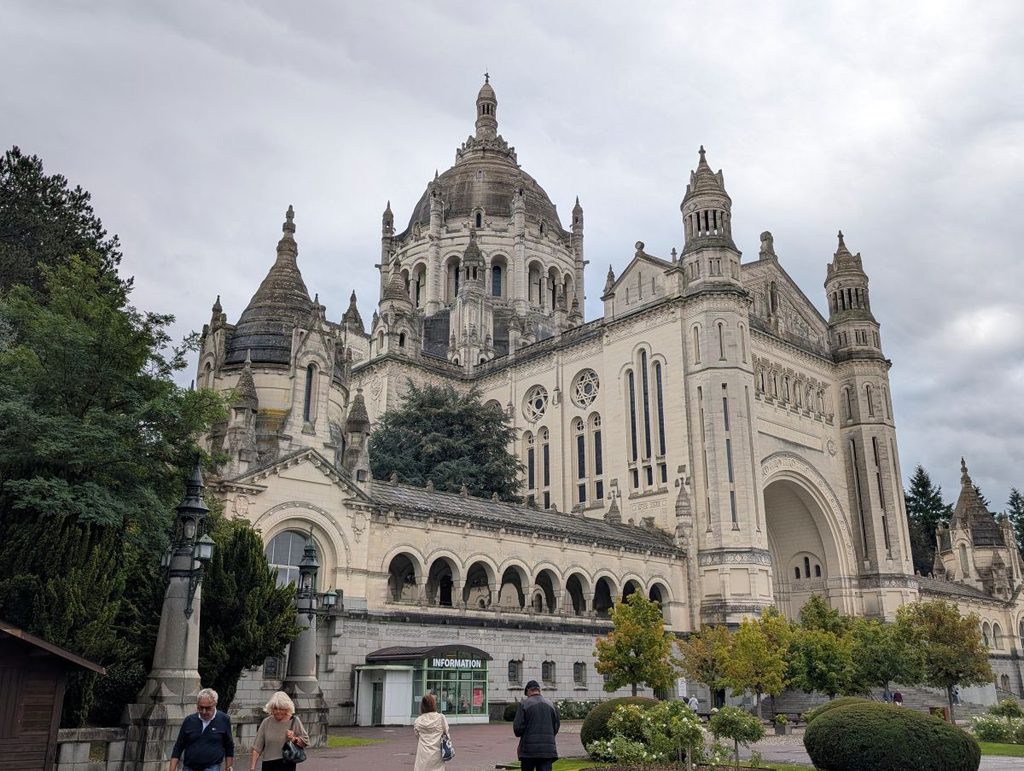
And so, when I realized I’d be traveling close by, I knew I had to stop at the Basilica of Saint Thérèse in Lisieux.
I went to pay my respects with reverence to another seeking woman…and to leave a candle burning brightly for her and the quiet comfort she offered to so many.
Why We Become Seekers After 50
Something else has caught my attention during this journey.
I keep seeing women my age and older wandering through these sacred places.
Sometimes they’re traveling with partners, but often they seem to be alone. They sit quietly in chapels, wander through cemeteries, study memorials, light candles, or simply stand looking at something for a very long time.
Maybe I notice them because I’m one of them.
But I also wonder whether there’s something about this stage of life that turns many of us toward seeking.
For decades, our lives can be so loud. We’re building careers, raising children, managing households, taking care of people, paying bills, building relationships, losing relationships, surviving disappointments, and doing all the things required to keep life moving.
Then something begins to change.
Children grow up. Careers mature. Parents age or die. The future that once seemed endless becomes noticeably finite, and questions that were easy to postpone when we were thirty become harder to ignore after 50.
Who am I now?
What do I actually believe?
What mattered?
What still matters?
What do I want to do with whatever time remains?
Maybe this is why genealogy becomes so compelling to so many people as they get older too.
We start looking backward at the same time we begin looking inward.
What My Spiritual Pilgrimage Has Taught Me
I came to France believing one part of this pilgrimage would be about finding my ancestors.
And it has been.
I’ve walked through their villages, searched their cemeteries, entered the churches where they married and baptized their children, and stood on the land where their lives unfolded centuries before mine.
But somewhere along the way, that search widened.
I began thinking about my father, who once quietly imagined seeing France himself.
I began thinking about the pilgrims who walked toward Mont Saint-Michel, the women who pursued spiritual lives inside institutions that restricted them, and the countless ordinary people who entered these churches carrying questions that sound very much like my own.
I’m still exploring my spiritual path and understandings of God, consciousness, unity, and what lies beyond this life. Answers that resonate with me have been coming in while I’ve been on this pilgrimage, which has now become one in every sense of the word.
But I don’t have all the answers yet.
Strangely, I’m becoming more comfortable with that.
These days I’m less interested in arguing with dogma and doctrine and more interested in understanding the longing within my own heart.
The desire to know.
The desire to belong.
The desire to understand why we’re here.
And perhaps most of all, the hope that somewhere underneath all the noise, struggle, history, and human imperfection, there might be something as simple and enormous as love.
Twenty years ago, my father died and I began searching backward through my family’s history.
This year, that search carried me into a little church in Normandy.
Somewhere on this journey, I found an underlying thread that weaves through us all. And in the finding of that thread, I also found within myself a deep respect for the heroism of the seeker.
And that has given a meaning to this pilgrimage that I hadn’t expected to find.
__
So, here’s to all the seekers.
May you become quiet enough to hear the questions whispering from within.
May you find the courage to embark on a path that finds you answers—not just about your relationship with spirituality, but about your relationship with yourself.
May you find the inspiration and motivation to rise to the challenge of those answers. And may you never, ever stop seeking.